Share This Article
WAYB builds family travel gear around a practical problem: taking a child seat through airports, rideshares and trips where a full-size seat is awkward to move. Its best-known product is the Pico, a forward-facing portable car seat, with carry bags and travel organizers around it. The central question is whether portability makes sense for your family, given your child’s stage, vehicles and typical journeys.
This review draws on the product information WAYB publishes, rather than hands-on use. We look at the Pico’s stated features alongside the supporting bags, then weigh the appeal against the checks a caregiver still needs to make.
We may earn a commission when you buy through links on this page, at no extra cost to you.
The travel case
WAYB’s clearest differentiator is how specifically it addresses moving a car seat. The brand lists the Pico Portable Car Seat at 8 lb, with an aerospace-grade aluminum frame and breathable AstroKnit mesh. Its foldable form and optional carry system target travel days when parents move between a car, terminal and another vehicle. That is a concrete benefit for families who regularly need a seat away from home.
WAYB also says the Pico is FAA-approved and meets applicable U.S. car-seat safety standards. Those statements are useful starting points, not a substitute for checking the label, manual and current instructions for your child’s fit and each installation. Approval does not mean universal fit: one seat will not suit every age, height, weight or vehicle. For occasional flights, compare the practical routine with bringing your usual seat or arranging a suitable seat at your destination.
- Weight to carry: the listed 8 lb makes moving the seat more plausible than hauling a bulky everyday model.
- Travel focus: the foldable design speaks to airports, taxis and visits where a seat may need to change vehicles.
- Fit remains personal: check your child’s measurements and the vehicle setup against WAYB’s current manual.
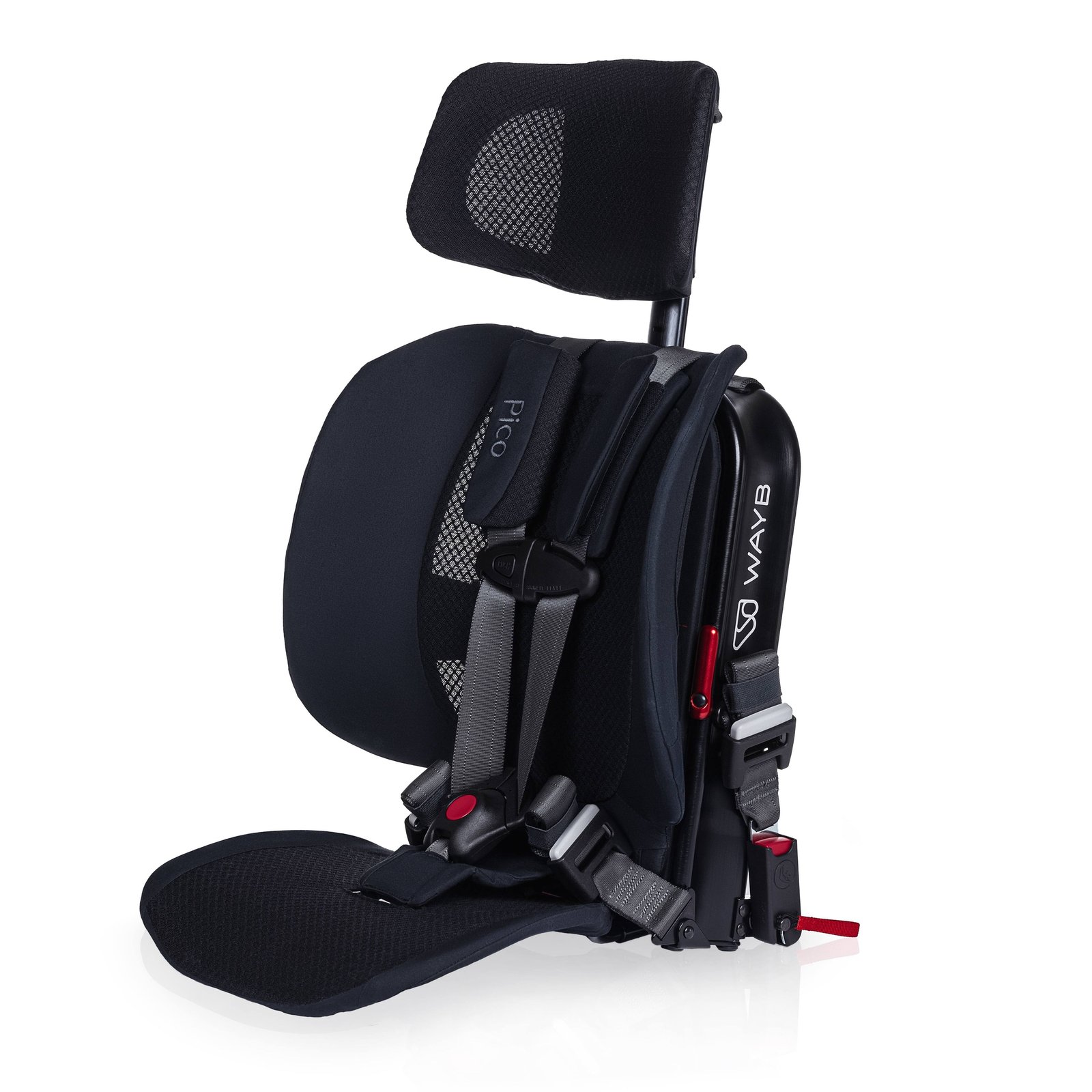
Portability is also a tradeoff. The Pico is a forward-facing seat, so families needing a rear-facing seat or a long-term primary seat should not assume it covers that need. Forward-facing only is a defining limit, not a small footnote. There is a learning curve with any unfamiliar seat, and a compact frame does not remove the need for correct installation. Review the dimensions, fit limits and instructions before treating it as a universal travel solution. The brand’s Pico seat details are the right place to confirm those specifics.
Carry and storage
The Pico Carry Bag is the most directly relevant companion. WAYB describes three carry modes and water-resistant fabric made with recycled material. That makes the accessory more than a simple sleeve if hands-free carrying matters through transit or an airport. It remains extra luggage, though, and buyers should check how it fits their intended carry routine rather than assume it replaces a travel bag.

WAYB’s range also includes the Daily Pack and packing cubes. They broaden the travel system, but their value depends on whether you need dedicated organization. WAYB says its bags use fabrics with more than half recycled content; that is a brand-stated material detail, not a complete measure of durability or environmental impact. Consider each accessory on its own merits and verify its materials and care guidance on the current product page.
- Choose the Pico Carry Bag if you want dedicated carrying modes for the seat.
- Consider the Daily Pack if a separate family travel backpack fits your packing habits.
- Skip add-ons that duplicate bags or organizers you already use.
What to weigh
The strongest reason to consider WAYB is a recurring need for a lighter, more portable forward-facing seat. For a family flying often, using rideshares or visiting relatives without suitable seats, the weight and fold may answer a real logistical problem. A family that mostly drives one car and already has a well-fitting everyday seat may see less value in a specialist seat.
Before deciding, make a short checklist:
- Confirm the child’s current size and stage are within the seat’s stated limits.
- Read the current manual and verify the seat works in the vehicles you expect to use.
- Check airline procedures and whether your travel plan calls for an approved child restraint in the aircraft cabin.
- Compare the seat plus any carry gear with the luggage you actually manage on a trip.
These checks matter more than a broad portability claim. Product specifications and airline policies can change, while a correct setup depends on the specific child, vehicle and trip. Verify before departure. If there is uncertainty about installation or fit, consult a certified child passenger safety technician or the relevant official guidance before travel.
For product research, we would keep the decision centered on the seat and treat accessories as optional. The Pico product page should answer current fit and use questions; the Carry Bag page can clarify carry features. The Daily Pack listing is relevant if the broader travel kit appeals, but it does not change whether the car seat is suitable.
One last look
WAYB makes the most sense for families with a repeated travel use case who have confirmed that a forward-facing portable seat fits their child and their vehicles. Its light, foldable design and purpose-built carry options are meaningful strengths. The key limitation is just as concrete: portability cannot make the seat right for every child or replace careful fit and installation checks. Review current specifications before deciding.
Consider the WAYB Pico when portable travel is a regular need and its fit works for your child; otherwise, keep your everyday seat as the reference point.