

Share This Article
Choosing a portable power station is less about finding the biggest number and more about matching capacity, output and recharge options to the job. BLUETTI’s Canadian range covers small portable units through larger systems, so the useful question is where its product tiers make sense – and what buyers should check before settling on one.
We reviewed BLUETTI’s Canadian product information for this overview. Its strengths are a broad range, several ways to recharge and clear capacity and output specifications. Its limits are the planning work those choices require and the fact that a portable station cannot supply every household load indefinitely.
We may earn a commission when you buy through links on this page, at no extra cost to you.
Range and roles
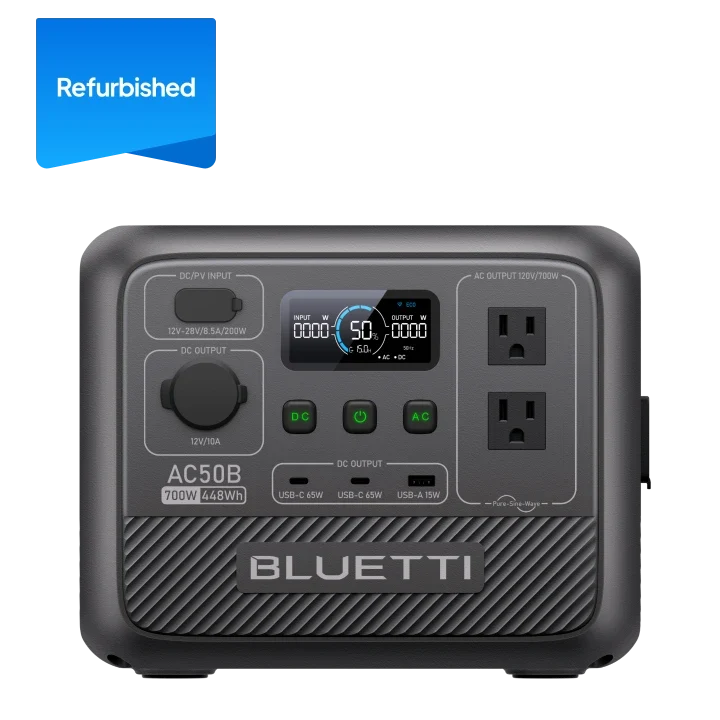
BLUETTI sells portable power stations, solar panels, generator bundles and home backup equipment in Canada. Its range makes it possible to choose a station around specific devices or a longer outage plan. Product listings identify watt-hours (Wh) for stored energy and watts (W) for output. Both matter: capacity gives a rough sense of runtime, while output indicates whether a device can run from the station at all.
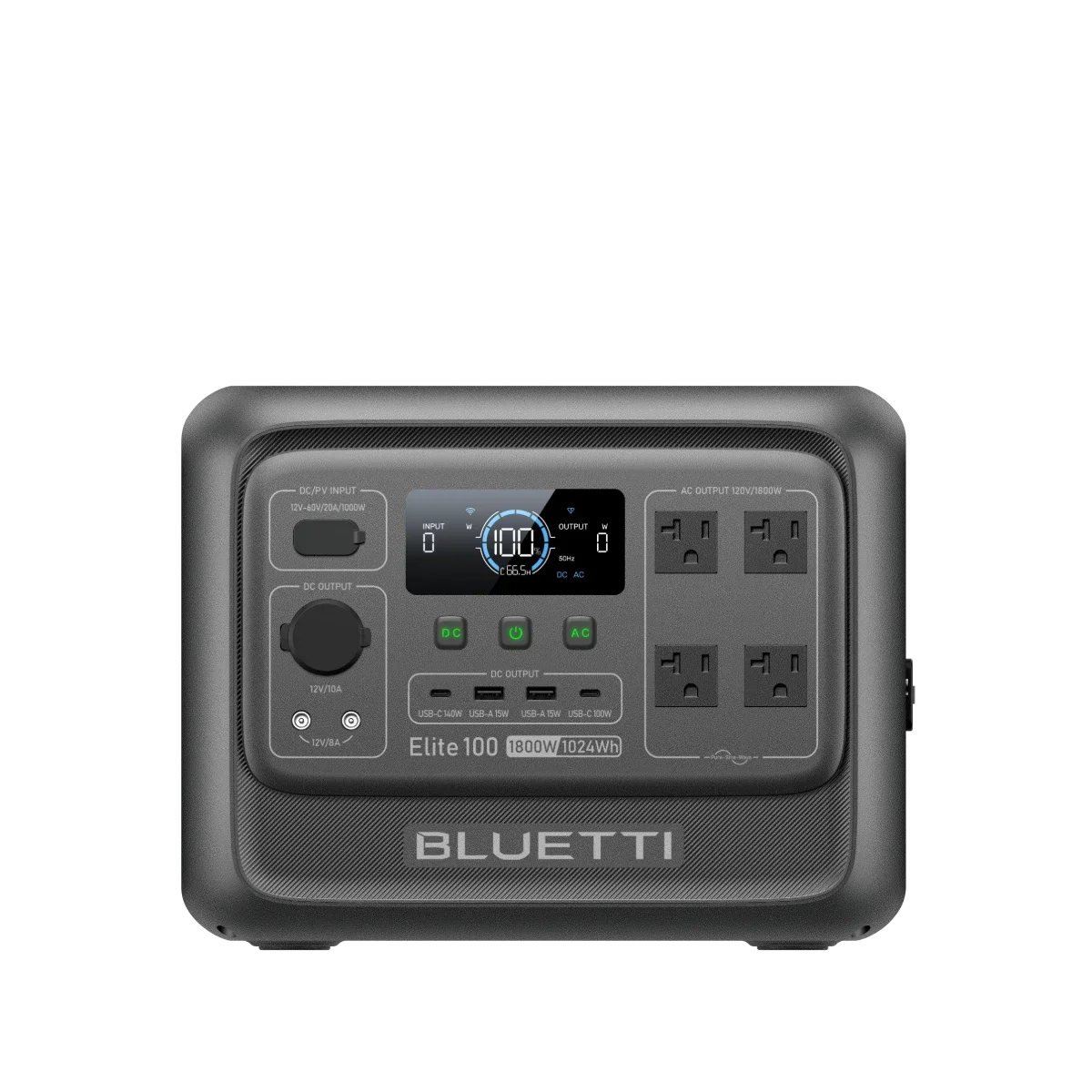
The BLUETTI Elite 100 V2 is listed with 1,024 Wh capacity and 1,800 W continuous output, a combination that points to a portable option for moderate loads. The BLUETTI Elite 300 is listed at 3,014 Wh and 2,400 W, giving it a larger energy reserve and higher continuous output for longer or heavier use within those limits. These figures come from BLUETTI’s Canadian product pages; they do not promise a particular runtime. Rated figures are not runtime guarantees. BLUETTI also lists the Charger 2, a vehicle charging accessory with up to 1,200 W charging for compatible systems when driving is part of the recharge plan.
Useful strengths
Three aspects of the lineup are persuasive on paper:
- Capacity choices: compact, mid-range and larger stations help avoid paying in space and weight for energy a buyer may not need.
- More than one recharge route: selected products pair with solar panels, and Charger 2 adds a vehicle-based option for compatible setups.
- Product specifications: watt-hour capacity and watt output give shoppers a starting point for comparing needs with the published listing.
These are real advantages for people willing to plan. A solar bundle may suit a campsite or cabin where grid access is limited, while a vehicle charging accessory can be useful for road trips. Recharge access shapes the fit. Check each listing for compatibility and included components; bundles can differ, and a photo alone does not establish what’s in the box.
BLUETTI describes Charger 2 as supporting alternator and solar inputs. Confirm exact station compatibility and required wiring before treating it as an add-on. The Charger 2 listing spells out its input and connection details. A useful system is the one whose charging path matches how it will actually be used, not simply the one with the most accessories.
Where the limits show
Power stations solve a bounded problem. A small model may keep phones and other modest electronics running, but it is not a substitute for a whole-home backup system. Even a higher capacity unit has finite stored energy: high-draw appliances shorten runtime quickly, and repeated use depends on access to a suitable recharge source.
Before choosing a size, make a short load list and note both operating wattage and hours of use. Add a margin for conversion losses and devices whose starting demand is higher than their normal draw. A station’s rated output must cover the load, and its capacity must cover the duration. This simple check is more helpful than picking by model name alone.
- List the essential devices and their wattage.
- Estimate how many hours each one needs to run.
- Check output limits, battery capacity and recharge options on the exact product listing.
- Consider carrying weight and where the station will be stored.
BLUETTI’s breadth is also a trade-off. It can be hard to compare stations, bundles and accessories at a glance, especially where a package name adds several components. A larger system may offer more flexibility, yet it brings greater cost, weight and setup complexity. Check the current Elite 300 configuration to confirm exactly what the selected package includes. Current price varies with capacity and bundled extras, so compare complete configurations on the Canadian store rather than relying on a product image or an old offer description.
A sensible shortlist
Start with the job, then compare models within the relevant tier. The Elite 100 V2 looks like the practical starting point when portability and broader everyday use both matter. Its published output and capacity put those tasks in context. A reader with longer runtime needs can look to the Elite 300, while checking that its added capacity is worth carrying and storing.
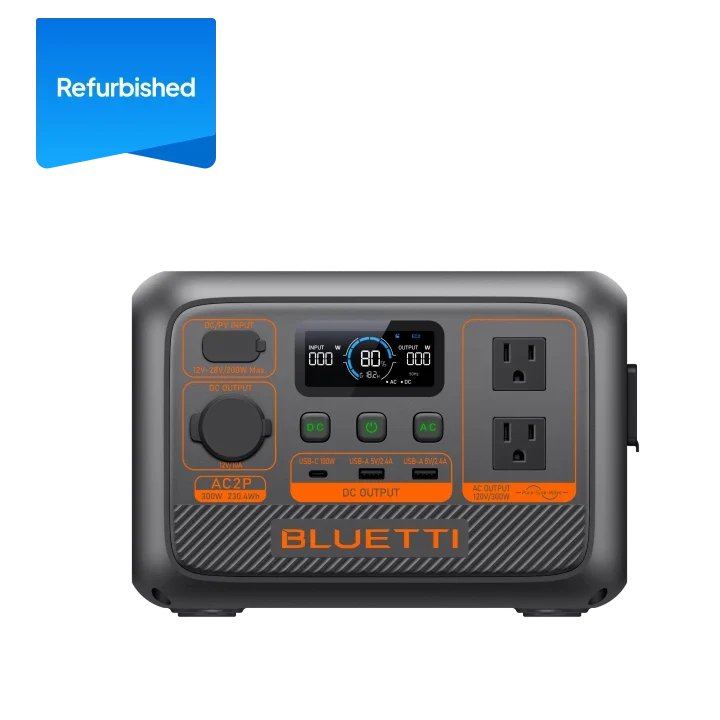
For modest device loads, compare the capacity and output on compact BLUETTI models with the actual devices you plan to connect. BLUETTI’s product listings identify different figures across the range, so we recommend verifying the exact model details rather than assuming nearby model names share the same capability. For a direct check, compare the Elite 100 V2 specifications with the devices you own. For a cabin, RV or household backup plan, compare solar input, expansion compatibility and connection types as carefully as capacity.
The Elite 300 page lists 2,400 W continuous output and 3,014 Wh capacity, making it the clearer reference point in this review when checking a higher-capacity option. Consider how each unit will be recharged between uses, and whether accessories are sold separately or included in the selected bundle. Those details shape the ownership experience as much as the headline capacity. BLUETTI’s Elite 300 listing is a useful place to verify the included connections and bundle choices.
One last look
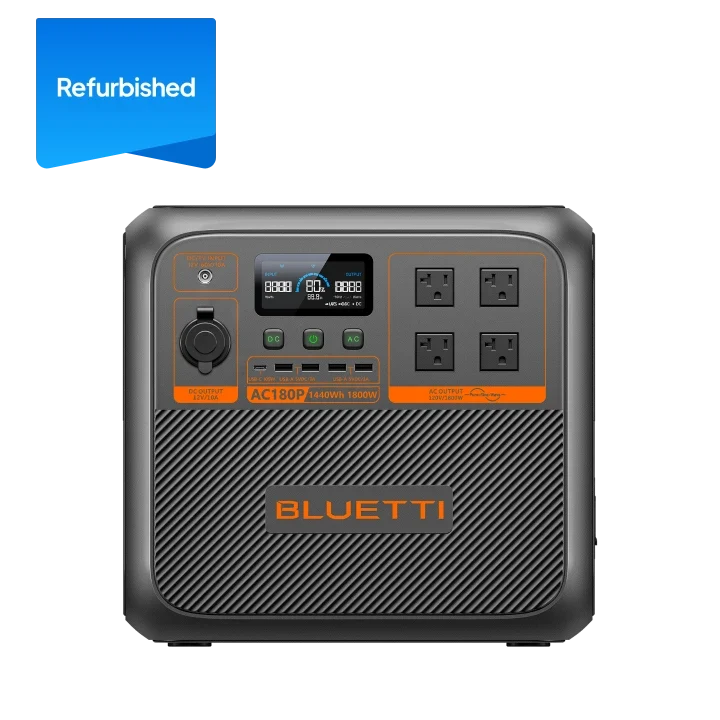
BLUETTI’s Canadian range is strongest for buyers who value several capacity tiers and flexible recharge planning, and who are prepared to compare specifications against a real load list. It is less compelling for anyone expecting a portable station to provide carefree, whole-home backup without runtime or recharge limits. Start with the lightest station that comfortably covers your essential devices, then move up only when the load calculation supports it.
We recommend BLUETTI for planned portable or partial backup needs, provided buyers verify output, runtime and bundle contents for their exact use.