Share This Article
Choosing an electric bike starts with the ride you need it to make. A short city commute, a mixed-surface route and a bike that must fit into a small storage area call for different priorities, even when the product pages use similar language.
Puckipuppy offers several formats and named models, so the useful first step is narrowing the requirements before browsing. We reviewed the US store’s product information for this guide; specifications and availability can change, so check the current page for the exact build.
We may earn a commission when you buy through links on this page, at no extra cost to you.
Start with the route
Write down the normal trip, not the most ambitious ride you might take once. Note distance, hills, pavement quality, stop-and-go traffic and where the bike will be parked. That list gives the motor, tires, suspension and battery information a real context.
- Mostly paved streets: prioritize a comfortable riding position, predictable handling and practical commuting equipment.
- Rougher paths: check tire width, suspension design and the maker’s intended-use guidance.
- Longer outings: compare the stated battery configuration and range conditions with your route, allowing for hills, rider load and assist level.
- Frequent stops: check whether the frame and bike weight are manageable when maneuvering or parking.
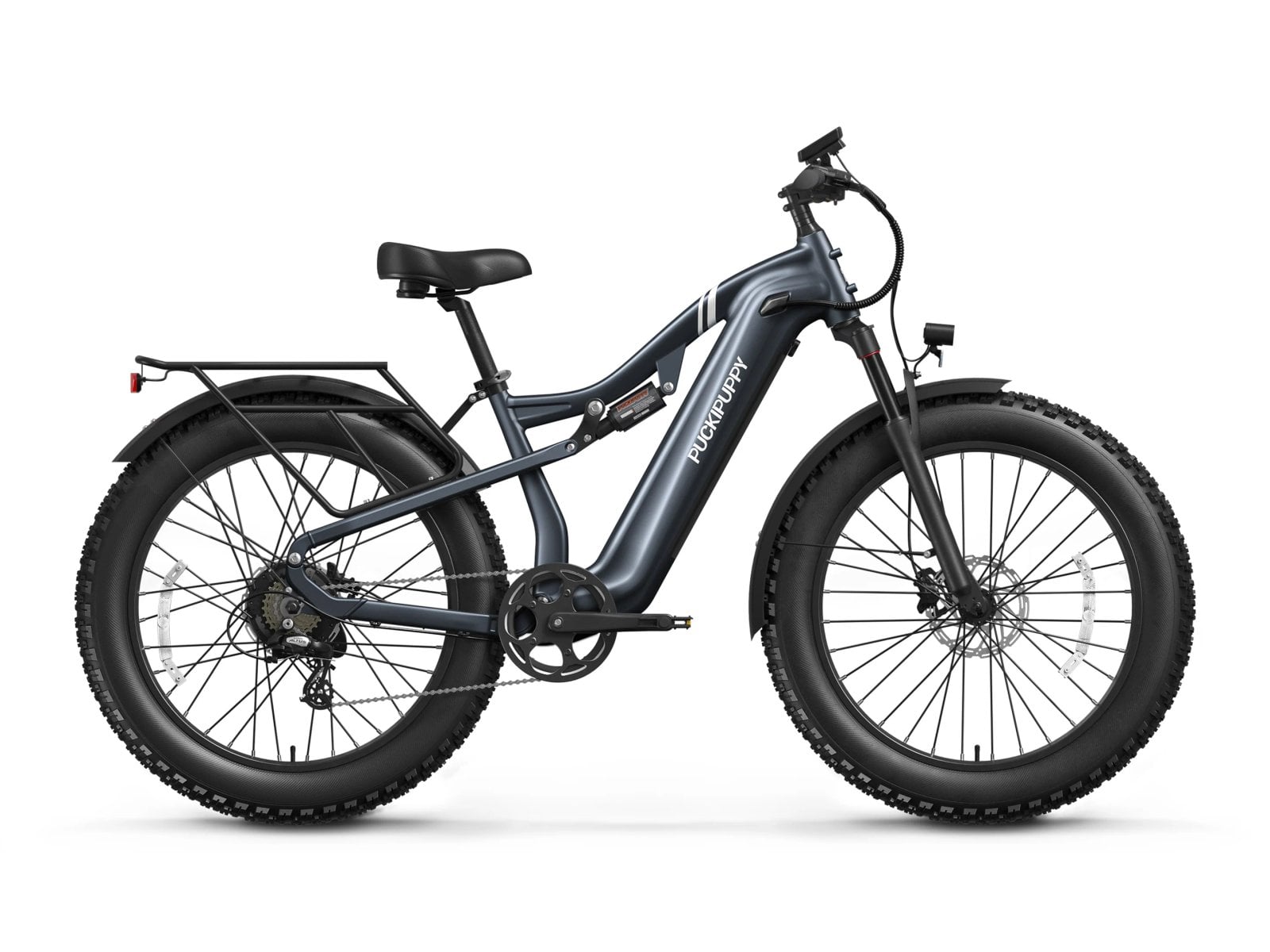
Range figures are especially easy to over-read. A maker’s maximum figure describes a stated scenario, not a guarantee for every rider or terrain. Confirm the battery capacity, test conditions and whether the battery can be removed for charging on each product page. The Labrador Pro page, for example, describes a full-suspension model and lists a 750W motor and a maximum range claim; treat those as store specifications to compare with your actual trip.
Match the frame
Frame style affects mounting, reach and how natural the bike feels at a stop. A step-through design can make getting on and off easier for some riders, but geometry still matters. Compare the listed rider height range, frame dimensions, handlebar position and saddle adjustment, then consider whether you can lift or turn the complete bike where you keep it.
The Poodle Ebike is described by Puckipuppy as a step-through commuter model, with the product page listing a 750W motor, hydraulic disc brakes and a claimed maximum range. That points to a different starting question than the full-suspension Labrador Pro: does an accessible frame and city-oriented setup suit your daily route? Verify frame sizing and the complete specification directly before shortlisting it.

Compare the shortlist
Use a compact shortlist to keep unlike models from blending together. These descriptions come from the store’s product pages, so confirm that the specifications still match the exact listing and variant you are considering.
| Model | Store positioning | Check before choosing |
|---|---|---|
| Labrador Pro | Full-suspension electric mountain bike | Fit, suspension setup and range conditions |
| Poodle Ebike | Step-through commuter | Frame measurements, braking details and charge routine |
| Samoyed Ebike | Step-through for everyday rides | Payload rating, fit and included equipment |
The Samoyed Ebike page describes a step-through frame and lists a 750W motor and a payload capacity. That makes load and frame comfort useful comparison points, but payload is not the same as a promise of comfort or range under every load. Check the product page for sizing, component details and any limitations before treating it as a commuter fit.
Plan ownership
A good match has to work after the ride too. Before comparing final cost, check what drives it: model configuration, battery arrangement, included accessories, shipping terms and any assembly or service needs. The store’s terms can change, so use the current US pages rather than relying on a copied summary.
- Confirm that the bike’s dimensions fit your body and storage space.
- Check total weight, battery removal and where you can charge it.
- Read the current delivery, return and warranty terms, including exclusions.
- Ask how replacement parts and service are handled where you live.
Also account for accessories as a separate decision. A rack, basket or lighting setup may be useful for your commute, but verify compatibility with the model instead of assuming every product photo shows standard equipment. If the bike will carry cargo, check the permitted load and how it changes the handling. For an apartment or shared storage room, the route from entrance to parking spot can matter as much as motor output.
Questions to settle
Should maximum range decide it? No single headline figure settles the question. Compare battery specifications and stated conditions, then leave a practical buffer for terrain, weather, stops and assist use.
Is a step-through automatically easier? It can simplify mounting for some riders, but the fit still depends on frame geometry and reach. Check the size chart and contact the store if a measurement is unclear.
Which option is best for mixed terrain? Start by comparing intended-use wording and suspension and tire details. The Labrador Pro is positioned for off-road riding, but the suitability of any bike depends on the actual surface and the manufacturer’s guidance.
What if two models seem close? Compare weight, fit, battery access, warranty coverage and the parts you would need to add. A clear answer on these points is more useful than choosing by color or a maximum-range claim alone.
One last look
Our practical recommendation is to shortlist by route and frame first, then compare the exact battery, fit, weight and ownership terms on the US product pages. Puckipuppy’s range gives shoppers several formats to consider, while the limitation is that store claims alone cannot tell you how a particular build will feel on your commute. If possible, arrange a suitable local test ride before committing.
Choose the model whose verified fit and configuration match your regular route, then confirm the current terms on its product page.