Share This Article
Choosing a portable power station is less about collecting features than matching the unit to the job. BLUETTI’s Canadian range spans compact stations, larger backup units and equipment for charging while travelling. The useful question is whether the capacity, output and recharge options suit the way you expect to use it.
We reviewed the Canadian product information and compared three distinct parts of that range. The listings make a strong case for choice and flexible charging, but they also leave buyers with real sizing and compatibility decisions to settle before ordering.
We may earn a commission when you buy through links on this page, at no extra cost to you.
A range with purpose
BLUETTI sells portable power stations, solar panels, generator kits and home backup equipment in Canada. That breadth is its clearest advantage: a reader can begin with a unit for devices and outdoor use, move to a higher-capacity station for more demanding backup, or consider vehicle charging accessories. The catalogue offers distinct roles rather than one universal box.
The brand’s listings also make technical comparisons possible. Capacity in watt-hours helps estimate how long a station may supply a load; output in watts helps judge which appliances it can support. Selected models use LiFePO4 batteries, and some listings specify app monitoring. Those are useful reference points, though real runtime depends on the devices connected and operating conditions.
In practical terms, the range’s strongest points are:
- Choice by scale: compact portable models sit alongside larger backup stations.
- Several recharge routes: selected setups use solar, expansion batteries or vehicle charging.
- Readable specifications: watt-hours and output ratings let buyers compare likely use cases.
For a road-trip context, the scene below captures the sort of portable-power setting the range addresses. It does not establish that any particular station can power every vehicle setup.
Three useful roles
The BLUETTI Elite 100 V2 is listed with 1,024Wh capacity, 1,800W output and a 3,600W surge rating. BLUETTI describes it as compact and suited to outdoor use and backup power. That combination makes it a plausible middle ground for people who need more than phone charging but do not want to start with the largest station. Its capacity still requires a load estimate: high-draw appliances can use stored energy quickly.
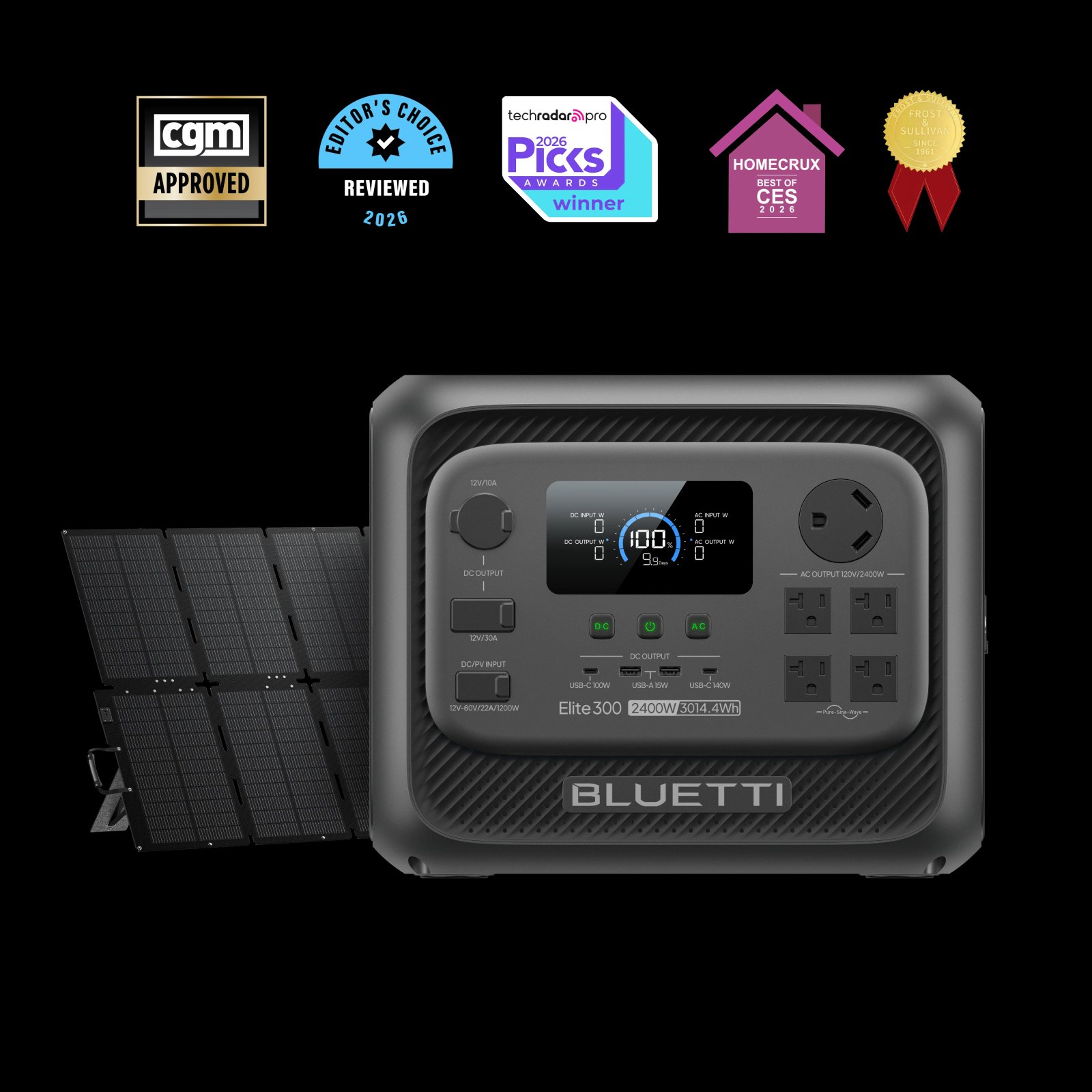
At the larger end, the BLUETTI Elite 300 lists 3,014Wh, 2,400W output, eight ports and a UPS response under 10ms. The added reserve and UPS feature are relevant for home backup planning, while the larger capacity means portability and storage deserve closer thought. A UPS specification is not a substitute for checking which equipment and loads the listing supports.
For vehicle-based charging, the BLUETTI Charger 2 is an accessory rather than a standalone battery. Its listing describes dual alternator and solar inputs, up to 1,200W combined charging, and PV-priority control. That may suit an RV or off-grid arrangement, but only after checking the installation, wiring and station compatibility. The headline charging figure alone does not tell you what a particular vehicle will deliver.
Visual range cues can help orient a shortlist, but models serve different needs. A smaller unit such as the Elite 10 Mini sits in a different class from an Elite 200 V2 or Apex 300. Check each current Canadian listing for the exact capacity, outputs and included components before comparing them.
Seeing other sizes can make the range easier to place, but the photo is not a specification. Use the product page to confirm its current configuration.
Where the limits show
The range’s breadth can also make selection less straightforward. A high capacity does not guarantee that a station can start or continuously run a chosen appliance; output, surge handling, port type and runtime all matter. Before deciding, write down the devices you need to power and check each one against the product listing.
- List essential loads: include running watts and any startup surge where relevant.
- Estimate duration: add up expected use rather than assuming the headline capacity equals usable runtime.
- Plan recharging: check wall, solar or vehicle input requirements and what components are included.
- Check the setting: consider weight, storage, ventilation and whether the setup is for travel or stationary backup.
That checklist makes the store’s technical detail easier to use. A useful shortlist should answer:
- Which devices matter during an outage or trip?
- How many hours should the station support them?
- Can you recharge from a wall outlet, solar panel or vehicle?
BLUETTI says selected models include app monitoring and offers solar bundles and expansion battery configurations across parts of its range. Those options can add flexibility, but buyers should confirm model-specific support and what is bundled. The system cost is shaped by station size, solar panels and add-ons, so compare complete setups on the Canadian store rather than relying on a single unit’s headline features.
A compact station photo offers a reminder to separate portability from capability: smaller format can be appealing for occasional device charging, while capacity and output determine how far that role extends. Consider an Elite 10 Mini only after checking its exact listing against your devices.

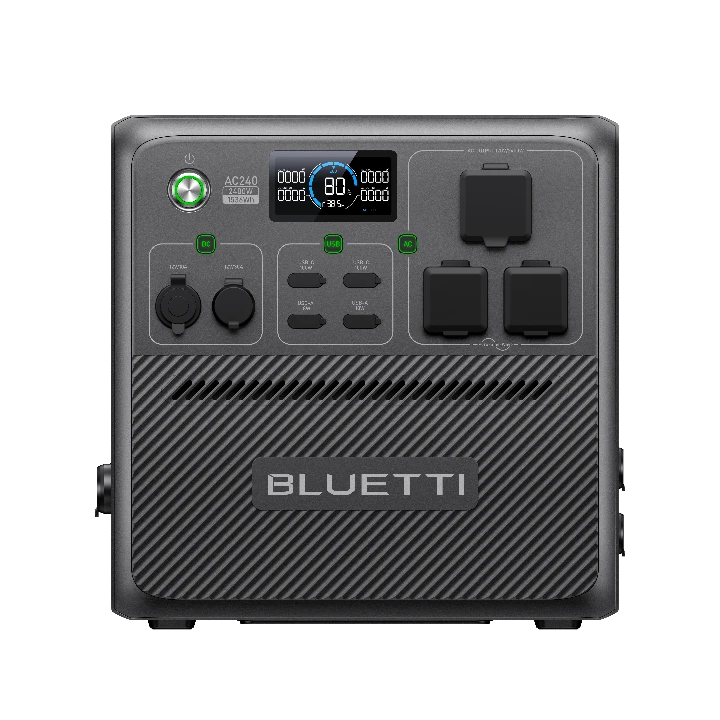
Likewise, larger units and solar kits can make sense when the extra reserve is genuinely useful. A model such as Apex 300 may merit a look for a more substantial setup, but its current product page should be the source for capacities, compatible batteries and panels. The same discipline applies to weather-resistant models such as AC240: verify the precise protection claims and intended conditions before taking it outdoors.
This larger-unit image is another visual reference, not proof that one size suits every household. Check the load and storage requirements first.
Who benefits most
BLUETTI is most compelling for buyers willing to size a system around actual loads and who value choices across portable, home-backup and solar-supported use. The Elite 100 V2 looks like a considered starting point for moderate portable needs; the Elite 300’s higher reserve and UPS detail better match a more demanding backup shortlist. Charger 2 belongs in the conversation only when vehicle charging is part of the plan.
It is less suited to anyone expecting a power station to be a simple plug-in answer without checking appliance demands or recharge access. Specifications are useful, but they cannot settle your setup without those details. Product pages also change, so verify current configurations, included accessories, shipping and warranty terms at the Canadian store.
One last look
Our recommendation is to shortlist BLUETTI if you have a clear use case and want to compare compact power, higher-capacity backup and solar or vehicle charging within one Canadian range. Start with the Elite 100 V2 for moderate portable needs, and consider the Elite 300 when its extra reserve and UPS feature answer a defined requirement. The main limitation is that choosing well takes more homework than the headline watt-hours suggest.
BLUETTI merits a shortlist when its model-specific output, runtime and recharge options match the loads you actually need to support.