Share This Article
Choosing an online certification provider starts with a practical question: does its course range match the credential and learning format you need? American Health Care Academy focuses on CPR, first aid and related healthcare training, with separate courses and bundled paths rather than a broad consumer education catalog.
For a first-time visitor, that focus makes the site relatively easy to scan. The useful distinction is between general CPR learning, combined CPR and first aid, and advanced courses aimed at healthcare roles. The right fit still depends on your employer or licensing body’s requirements.
We may earn a commission when you buy through links on this page, at no extra cost to you.
A focused course catalog
The academy’s central idea is online access to essential training. Its catalog covers CPR and AED learning, first aid, bloodborne pathogens, HIPAA, and advanced life support. That mix gives the brand a clear role for people who need a course for work, renewal, or personal preparedness, while course acceptance remains a question to settle with the organization requesting the credential.
- Core skills: CPR and AED courses for general learners.
- Combined coverage: CPR and first aid options for people who need both subjects.
- Professional topics: ACLS, PALS, bloodborne pathogens and HIPAA paths.
That spread is more useful than a single all-purpose course, because a student can begin with the subject they actually need. Start with CPR Certification if the requirement is CPR alone, or review its course page for the current scope before enrolling. For combined needs, the academy lists CPR and First Aid Certification as a distinct option; the combined course details are the place to confirm coverage.
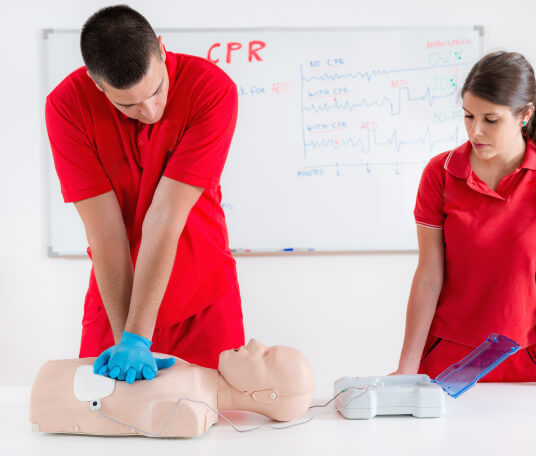
Three paths in context
Looking at named offerings makes the brand easier to understand. CPR Certification is the direct route for learners whose requirement is limited to CPR. Its detail page introduces the course chapter sequence, so a reader can check the material structure before deciding whether the online format fits.
Open CPR Certification to check what the academy currently includes. The course overview is relevant for people with a straightforward requirement, while anyone who needs first aid too should compare against the CPR and First Aid course page. Those are separate pages and separate paths, not interchangeable labels.
CPR and First Aid Certification is the more consolidated choice when both subjects appear in a workplace or personal learning checklist. Combining related material may reduce the need to navigate separate course routes, but readers should still check that the certificate format and curriculum satisfy their specific requirement. See the course description and current enrollment details before treating a bundle as equivalent to a particular in-person class.
The advanced end of the catalog includes ACLS Certification. Advanced Cardiovascular Life Support is a more specialized subject than general CPR, so it is most relevant to healthcare learners whose role or renewal plan calls for it. The ACLS course page outlines that path; it should not be assumed to replace a workplace’s own training rules.

Where the model helps
The site’s strongest practical case is choice by training need. A learner can consider a focused CPR course, a CPR and first aid combination, or advanced options such as ACLS. Related courses such as bloodborne pathogens and HIPAA broaden the offer for workplace compliance, and the academy also describes group and blended training routes.
- Identify the exact certificate or subject your employer requests.
- Compare a single subject course with a combined course if your checklist names multiple topics.
- For advanced clinical courses, confirm the learner prerequisites and acceptance rules directly.
- Check the current course page for format, certificate delivery and enrollment terms.
Cost is another item to check on the live store because it may vary by course and any included components. We avoid quoting a fixed amount here. The current CPR course listing, combined certification listing, and ACLS listing are the relevant places to confirm what is available and what the enrollment includes.
For organizations training several people, the group options may also be worth a look. Group arrangements can differ from individual online enrollment in scheduling and delivery, so readers should compare the academy’s group information with the standalone CPR route and combined course route. Choosing based on audience and format helps keep the comparison grounded.
Questions worth checking
Online convenience is only valuable when the resulting credential works for the reader. Before choosing, check the recipient’s current rules, particularly if a course is for employment, professional renewal, or a specific jurisdiction. The academy describes its course options, but the institution requesting proof has the final say on acceptance.
- Does your employer accept an online course for this requirement?
- Is the course initial certification or renewal, and does the page match that need?
- Are you choosing general CPR or a specialized clinical course such as ACLS?
- Do you need a combined course, group arrangement or blended format?
The catalog is broad enough to make those distinctions possible, though this means careful selection matters. Course names can sound similar while serving different audiences. Read the CPR page, CPR and First Aid page or ACLS page according to the credential you have been asked to obtain, then verify the details with the recipient.
One last look
American Health Care Academy is best understood as a focused training provider with individual, combined and more specialized course paths. We would start with the exact credential required, then compare the relevant course page and delivery format. Its main limitation is that online availability alone cannot establish whether a particular employer or credentialing body will accept a course.
For a first-time visitor seeking CPR or first aid options, the catalog gives a useful starting point; advanced learners should verify eligibility and acceptance before enrolling. View the live course details for the latest scope and terms.
Choose the course that matches the credential requested, and confirm acceptance with the organization that will receive it.